A distributor needs to check whether an order shipped. A dealer wants to know if a part is in stock before promising a delivery date to their own customer. Right now, both of them are doing the same thing: emailing your sales team and waiting.
That wait is the problem. Not because your team is slow, but because dealers and distributors are asking questions your systems already have the answers to. They just don’t have a way to ask the system directly.
Why Dealers and Distributors Need Their Own Portal
Manufacturers selling through a dealer or distributor network have a layer of customers that behaves differently from a direct end buyer. A dealer places frequent, recurring orders. They need pricing that reflects their tier or contract terms, not a public list price. They want to check stock before making a promise downstream. And they expect to do all of this without picking up the phone every time.
When none of that is self-service, a few things happen predictably:
- Your sales and support teams spend hours on order-status and stock-check questions that don’t require human judgment
- Dealers place orders based on outdated pricing or inventory information, because nobody updated them
- Larger distributors start asking why a smaller competitor’s portal is easier to work with than yours
None of this is really about technology being unavailable. It’s about the self-service layer not existing yet.
What Experience Cloud Actually Gives You
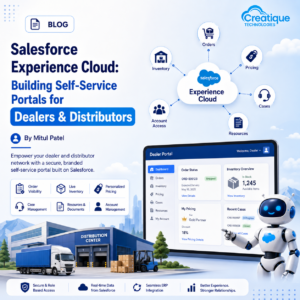
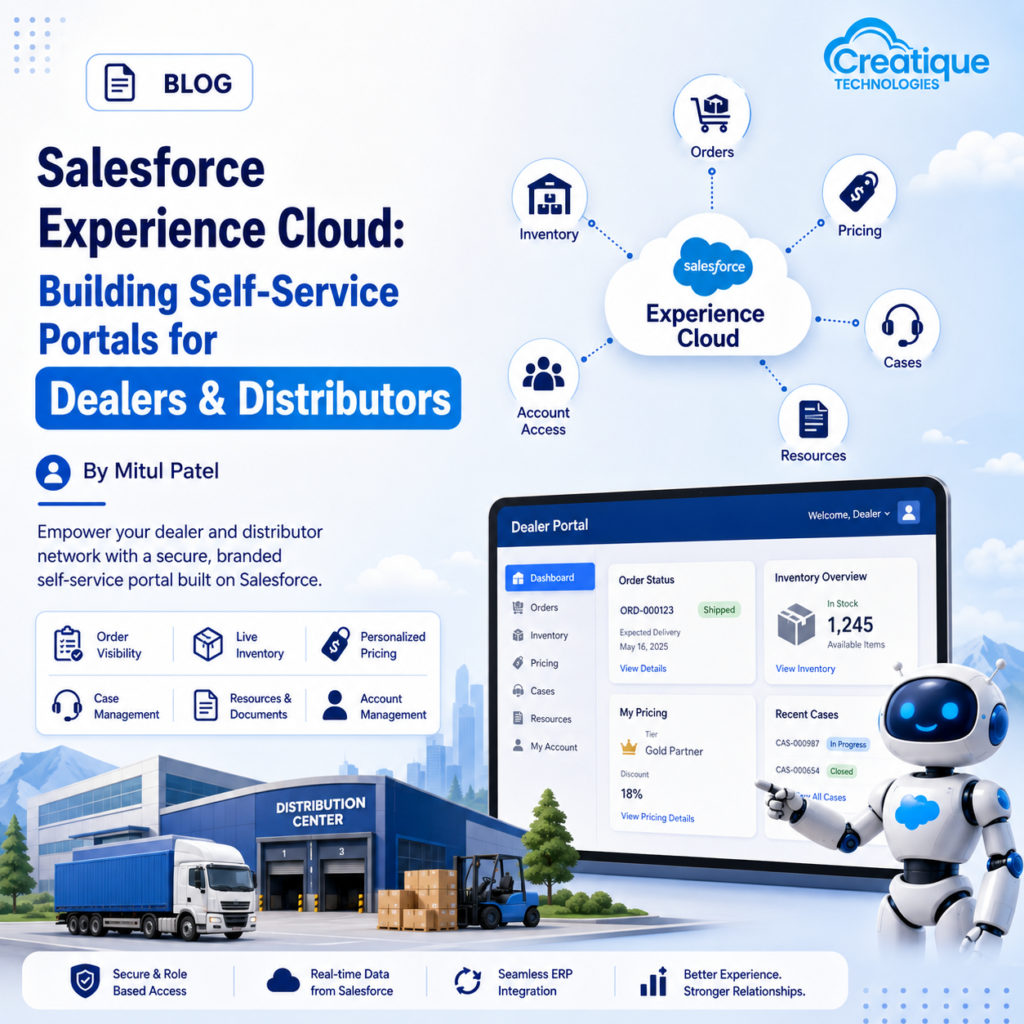
Salesforce Experience Cloud lets you build a branded, secure portal on top of the same Salesforce data your internal teams already work in, without giving dealers and distributors access to your CRM directly.
The practical result is a single place where a dealer or distributor can:
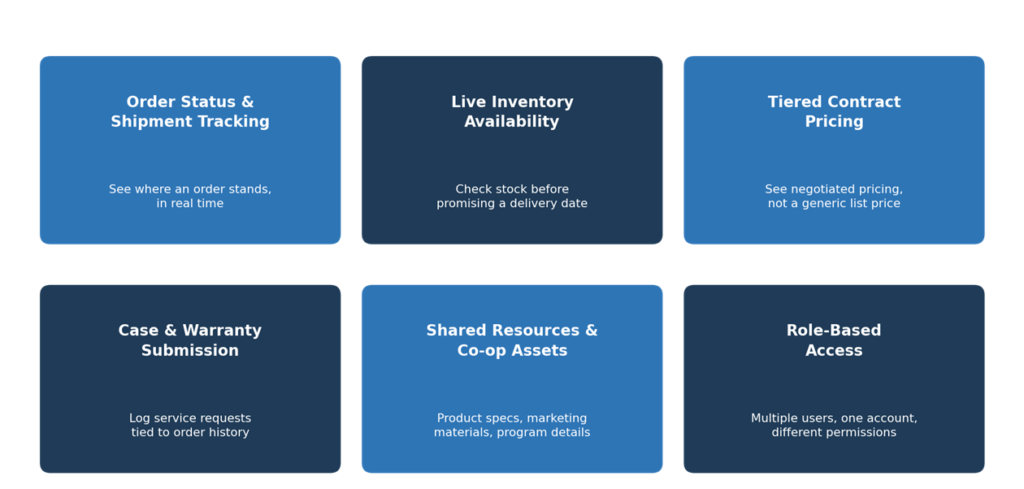
- Check real-time order status and shipment tracking
- View live inventory availability before placing an order
- See their specific pricing, contract terms, and volume tiers
- Submit and track service or warranty cases
- Access shared resources like product specs, marketing assets, or co-op program details
Because it’s built on Salesforce, the same order, pricing, and case data your internal team sees is what the portal shows. There’s no separate system to keep in sync, and no risk of the portal showing something your ERP disagrees with, provided the integration underneath is solid.
The Features That Actually Matter for This Use Case
Not every portal feature is equally important for a dealer or distributor audience. A few carry most of the weight.
Order visibility tied to real ERP status. A portal that shows “processing” for three days after an order has actually shipped is worse than no portal at all, because it trains users not to trust it. This only works if the underlying Salesforce-ERP integration is current, not a nightly batch job running twelve hours behind.
Tiered, contract-aware pricing. Dealers on different volume tiers or regional contracts need to see their actual negotiated pricing, not a generic list price they then have to double-check with a rep anyway.
Inventory and availability by location. If you have multiple warehouses or distribution centers, a dealer needs to know not just whether something is in stock, but where, and how that affects delivery timing.
Case submission with context already attached. When a dealer submits a warranty or service case through the portal, it should already be tied to their account and order history, so your team isn’t starting from a blank form.
Role-based access within the same account. A distributor may have multiple users with different permissions, someone who can place orders and someone who only checks status. Experience Cloud handles this natively through its sharing and permission model.
How This Fits with What You’ve Already Built
If you’ve aligned Order-to-Cash across Salesforce and your ERP, and built a unified view in Data Cloud, a dealer portal is one of the more direct ways to put that work in front of the people who benefit from it most. The data pipeline you built for your internal teams is the same one that powers what a dealer sees when they log in.
This also connects directly to Agentforce. Once a portal is in place, a service agent can handle a dealer’s routine question, “where’s my order,” “is this part in stock,” inside the same portal experience, escalating to a human only when the request actually needs judgment. The portal becomes the front door; the agent becomes the first responder behind it.
Common Mistakes When Building a Dealer Portal
Launching with incomplete or stale data behind it. A portal is only as good as the data feeding it. If inventory numbers are wrong or order status lags, dealers stop using it within weeks and go back to calling.
Trying to replicate your entire CRM in the portal. Dealers don’t need everything your internal sales team sees. Scope the portal around the handful of things they actually ask for repeatedly, and expand from there.
Ignoring mobile use. A lot of dealer and distributor staff check order status from a warehouse floor or a truck, not a desk. A portal that only works well on a desktop browser will get ignored.
Skipping a real onboarding plan. Even a well-built portal needs a rollout: training materials, a clear announcement, and a period where old channels (email, phone) stay open while adoption builds.
Getting Started
Start by identifying the two or three questions your team answers most often for dealers and distributors, order status, stock checks, and pricing are usually near the top. Build the portal around solving those well before adding anything else.
Then pilot with a small group of your most active dealers. Their usage patterns will tell you what to prioritize next far more reliably than a feature wishlist built in a conference room.
Final Word
Dealers and distributors don’t want more meetings or more emails. They want answers to routine questions without waiting on a person to give them. Experience Cloud, built on the same data your internal teams already trust, is how you give them that without duplicating your systems or your headcount.
Want to Build a Portal Your Dealers Will Actually Use?
At Creatique Technologies, we help manufacturers design and launch Experience Cloud portals that connect cleanly to real ERP and order data, so dealers and distributors get accurate answers from day one.
Book a free portal strategy call with our team today.